
January has a way of arriving with expectations. New year, new habits, new promises to yourself. By the second or third week, though, reality usually shows up quietly. Appetite changes. Energy fluctuates. Some days feel easier than others. And suddenly, the plans that felt reasonable on January 1 start feeling heavy.
If that sounds familiar, you’re not doing anything wrong.
Nutrition later in life is not about willpower or discipline. It’s about comfort, consistency, and choosing what actually supports your body now. This year does not need another set of strict rules. It needs kindness, practicality, and a little honesty about what you can truly keep up with.
That’s what these nutrition resolutions are about. Not changing everything at once. Just making food feel supportive again.
Why Traditional Nutrition Advice Often Misses the Mark
Most nutrition advice floating around at the start of the year is designed for younger bodies. Faster digestion. Higher energy levels. Fewer medications. More time and motivation to cook, plan, and experiment.
For seniors, that advice can feel out of place very quickly.
Meals that once felt light may now feel uncomfortable. Appetite can be unpredictable. Some foods don’t sit the way they used to. Add medications, joint pain, or fatigue to the mix, and suddenly food decisions feel more complicated than they should.
This is where many well-intended plans fall apart. Not because you failed, but because the plan never fit your life in the first place.
Good nutrition later in life needs to work with your body, not against it.
What Sticking with It Really Means After 60
When people talk about “sticking to” a resolution, it often sounds rigid. As if success depends on never slipping.
That approach doesn’t hold up well over time.
For seniors, sticking with nutrition resolutions usually means something quieter. Eating well most days. Choosing foods that leave you feeling steady instead of drained. Adjusting without guilt when your energy or appetite changes.
Consistency matters more than intensity. A habit you can repeat calmly will always outlast a plan that demands constant effort.
Resolution One Eat for Energy Not for Rules
There is a lot of pressure around eating the “right” way. Avoid this. Cut that. Measure everything. Follow a strict schedule.
But rules do not always translate to energy.
Pay attention to how food makes you feel after you eat it. Do you feel comfortable? Steady. Satisfied. Or sluggish and uneasy.
Eating for energy means choosing foods that help you move through your day with ease. It means honoring hunger when it shows up and not forcing meals just because the clock says so.
Many seniors feel trapped by a New Year’s resolution diet that looks impressive on paper but leaves them tired or frustrated in practice. Letting go of rigid food rules is often the first step toward a healthier relationship with eating.
Resolution Two: Build Meals Around What Your Body Needs Now
Your body’s needs shift with time, and that is normal.
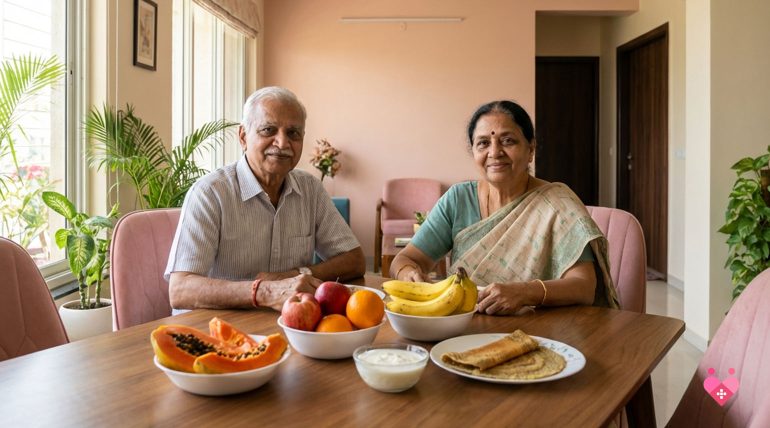
Protein becomes more important for maintaining strength. Fiber helps digestion stay regular and comfortable. Healthy fats support joints, brain health, and satiety. Hydration matters more than many people realize, even when thirst cues are subtle.
This does not mean turning every meal into a calculation.
It can be as simple as adding a source of protein you enjoy. Including vegetables that are easy to digest. Choosing fats that leave you feeling satisfied rather than heavy. Sipping fluids throughout the day instead of waiting until you feel thirsty.
Small adjustments made consistently do more than dramatic changes that are hard to maintain.
Resolution Three: Make Eating Easier, Not More Complicated
Cooking every day can be tiring. Planning meals can feel repetitive. Grocery shopping may take more effort than it once did.
Acknowledging this is not giving up. It is being realistic.
Repeating meals you enjoy is fine. Simple food is not inferior food. Convenience does not mean poor nutrition.
Eating well becomes easier when food fits naturally into your routine. That may mean keeping meals familiar. Choosing ingredients that require less preparation. Or accepting help when cooking starts to feel like a burden.
Nutrition resolutions last longer when they simplify life instead of adding stress.
Resolution Four Respect Your Medical Reality
Many seniors manage more than one health condition. Medications can affect appetite, digestion, and nutrient absorption. Some foods interact with prescriptions or worsen symptoms.
This is why generic diet advice often feels off.
Respecting your medical reality means paying attention to what supports your health rather than chasing trends. It means understanding that your nutrition choices should complement your care plan, not conflict with it.
If certain foods no longer agree with you, it is okay to let them go. If your needs feel confusing, guidance can be helpful. You do not need to figure everything out on your own.
Resolution Five: Focus on Patterns, Not Perfect Days
No one eats perfectly every day. And no one needs to.
One heavy meal does not undo weeks of steady eating. One skipped day does not erase progress. Nutrition works in patterns, not moments.
This mindset is especially important when thinking about nutrition resolutions. The goal is not perfection. It is balance over time.
Many seniors feel discouraged when a new year’s resolution diet feels broken after a single off day. In reality, flexibility is what makes habits sustainable. Food should support life, not control it.
Why Support Makes Nutrition Easier to Maintain
Eating well becomes more manageable when support is present. That support may look different for everyone.
Sometimes it helps with grocery shopping or meal preparation. Sometimes it is medical guidance that brings clarity. Sometimes it is simply knowing someone is paying attention to your overall well-being.
Nutrition does not exist in isolation. It is connected to mobility, health, energy, and emotional comfort. When those areas are supported, eating well often follows naturally.
This is where healthcare assistance plays a quiet but important role.
Where AgeWell Fits Into This Journey
At AgeWell Care, the focus is not on forcing change. It is on supporting seniors in ways that respect their independence and dignity.
When health needs are managed, routines feel steadier. When assistance is available, daily tasks feel less overwhelming. And when stress is reduced, nutrition choices often improve without extra effort.
Good food decisions are easier when the rest of life feels supported.
A Gentle Way to Move Forward
You do not need to overhaul your diet in 2026. You do not need to follow someone else’s idea of what eating well should look like.
Choose one or two changes that feel good for your body. Notice how you feel. Adjust without judgment. Let your nutrition resolutions grow slowly, in a way that fits your life.
This year is not about proving anything. It is about caring for yourself in ways that last.

Dr. Dipanjan Chatterjee is the Medical Director at AgeWell™ and a Senior Consultant in Critical Care Medicine at Kolkata, with over 20 years of clinical experience. He holds an MD in Anaesthesiology, FNB in Cardiac Anaesthesiology, FECMO, a Certification in Geriatric Medicine (CCGMG), and an Executive Program in Healthcare Management from IIM Kolkata. His articles on senior health, geriatric care, and age-related conditions are grounded in deep clinical expertise and decades of frontline medical practice.