
Winter can be beautiful, with soft sun, cozy afternoons, and hot chai. But for seniors, the cold months can also mean stiff joints, low immunity, and a higher risk of infections. This is where choosing the right winter food in India becomes essential, not just for taste but for health and comfort.
The good news is that Indian kitchens are already full of powerful winter superfoods. With a few thoughtful tweaks, families can turn everyday meals into gentle medicine for ageing bodies.
Why Winter Diet Matters More for Seniors
As the temperature drops, the body works harder to stay warm, and seniors often feel:
- Lower energy levels
- More aches and pains
- Slower digestion
- Greater vulnerability to colds and infections
A carefully planned winter food routine in India helps:
- Support immunity
- Keep joints and bones strong
- Maintain steady energy
- Improve mood and sleep
Food, in this season, is not just fuel. It is warmth, comfort, and protection in every bite.
Traditional Indian Winter Superfoods That Support Elderly Health
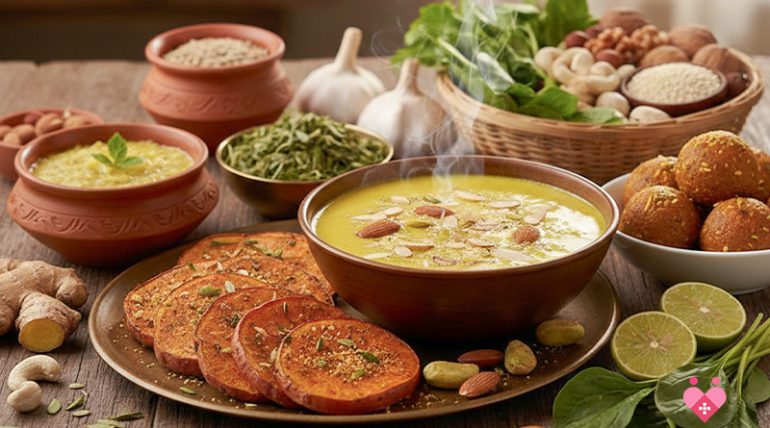
Here are some of the best winter superfoods that fit naturally into Indian meals and work especially well for older adults.
1. Ghee
Pure ghee, when used in moderation, is a powerful winter ally. It supports joint lubrication, digestion, and provides easily digestible energy.
- Add a small spoon to dal, khichdi, or soft rotis.
- Use it to temper soups or light winter sabzis.
For seniors with poor appetite, a little ghee can make food more appealing and comforting.
2. Millets like Bajra and Jowar
Millets feature prominently in traditional winter food in India because they are warming and rich in fiber, iron, and minerals.
- Bajra roti with ghee
- Bajra khichdi with vegetables
- Jowar porridge for breakfast
These grains help keep seniors full for longer and support better blood sugar balance.
3. Root Vegetables: Carrot, Beetroot, Sweet Potato
Root vegetables thrive in winter and are loaded with antioxidants, vitamins A and C, and fiber.
- Carrot and beetroot soups
- Boiled or roasted sweet potatoes as snacks
- Light sabzis with carrots and beets
They support heart health, digestion, and eye health – all crucial for ageing adults.
4. Leafy Greens: Methi, Palak, Sarson
Winter is the season of lush green vegetables in India. Fenugreek (methi), spinach (palak), and mustard greens (sarson) are rich in iron, calcium, and vitamins.
- Palak soup or palak dal
- Methi paratha with curd
- Sarson ka saag with a small portion of makki or bajra roti
For seniors, greens support bone health, immunity, and energy levels.
5. Amla and Citrus Fruits
Amla (Indian gooseberry) is one of the most powerful immunity boosters. Oranges and guavas are also abundant winter foods in India and are full of vitamin C.
- Amla murabba in small quantity
- Amla chutney or juice
- Fresh oranges or guava slices as mid-morning snacks
These fruits help protect against seasonal infections and support skin and gum health.
6. Jaggery and Sesame (Til)
Til and jaggery are classic Indian winter partners. They are warming, rich in iron, calcium, and healthy fats.
- Til chikki or til laddoo in moderation
- Jaggery instead of refined sugar in some preparations
For seniors, these should be portion-controlled but can gently support energy and blood circulation.
7. Nuts and Seeds
Almonds, walnuts, flaxseeds, and pumpkin seeds are excellent winter companions. They provide healthy fats, protein, and antioxidants.
- Soaked almonds in the morning
- A small mixed nuts and seeds trail mix
- Nut-based warm milk at night (if tolerated)
These help with brain health, joint comfort, and skin nourishment.
How to Make Winter Superfoods Senior-Friendly
Superfood only helps when seniors can chew, digest, and enjoy them.
- Prefer soft textures: soups, stews, khichdi, porridge.
- Go slow on oil, salt, and chilli to protect the heart and digestion.
- Offer smaller, more frequent meals if their appetite is low.
- Combine warm liquids like soups and herbal teas throughout the day.
Sample Senior-Friendly Winter Day on a Plate
You can use this as a soft structure and adjust based on medical advice:
- Morning: Warm water with a small piece of amla or an herbal drink, soaked almonds.
- Breakfast: Millet porridge or soft upma with vegetables.
- Mid-morning: Orange or guava slices.
- Lunch: Dal with ghee, bajra roti, palak or methi sabzi, small salad.
- Evening: Ginger tea with a small til or nut-based snack.
- Dinner: Vegetable soup with sweet potato or khichdi with mixed vegetables and ghee.
This kind of pattern uses traditional winter food in India in a gentle, age-friendly way.
How Technology and Care Support Winter Nutrition
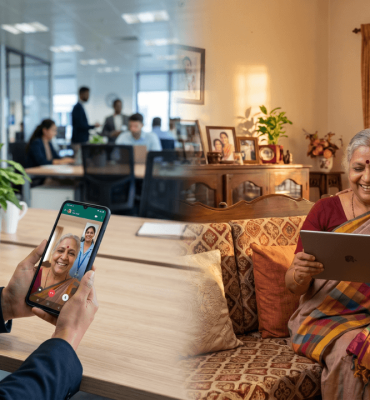
Families today are not always physically present, but support does not have to stop there. Smart senior care healthcare technology can help track:
- Meal timings
- Hydration reminders
- Sugar and blood pressure readings
When combined with regular home visits or check-ins, these tools help ensure that all those carefully chosen superfoods are actually getting eaten and tolerated well.
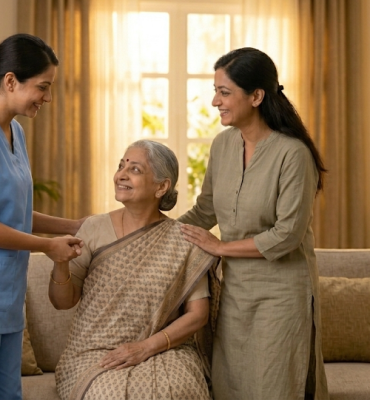
At the same time, professional support like elderly care in Kolkata can make a big difference. Trained caregivers can:
- Plan and cook simple winter meals
- Adapt recipes to chewing or digestion needs
- Watch for any reactions or discomfort after certain foods
- Coordinate with doctors or nutritionists when changes are needed
Gentle Reminders for Families
When planning winter food for ageing parents or grandparents:
- Ask about what they enjoyed eating in their younger days and build from there.
- Watch for signals: bloating, gas, heaviness, or disturbed sleep might mean a food is too rich.
- Keep water, warm soups, and herbal teas handy to prevent dehydration.
- Always factor in medical conditions before adding jaggery, nuts, or high-fiber foods.
Food choices are as emotional as they are physical, especially for elders. The goal is to keep winter nourishing, familiar, and kind.
Keep your loved ones warm, nourished, and cared for this winter. Discover how AgeWell’s professional caregivers support senior nutrition, daily wellness, and home comfort with compassion and expertise.

Dr. Dipanjan Chatterjee is the Medical Director at AgeWell™ and a Senior Consultant in Critical Care Medicine at Kolkata, with over 20 years of clinical experience. He holds an MD in Anaesthesiology, FNB in Cardiac Anaesthesiology, FECMO, a Certification in Geriatric Medicine (CCGMG), and an Executive Program in Healthcare Management from IIM Kolkata. His articles on senior health, geriatric care, and age-related conditions are grounded in deep clinical expertise and decades of frontline medical practice.